Today I want to share with you a resource that I’ve been using in my studio for the past 12 years.
This series of books have become a valuable activity enjoyed by my youngest students all the way up to 4th and 5th grade.
They are often part of the final 5 minutes of our lesson time together, making for a nice change of pace and a clear indication that our time together is wrapping up.
Sometimes I also use them to close out our music and movement time at the beginning of a lesson before we move to our time at the piano.
It’s certainly not traditional for something like this to be included in a piano lesson—after all, they have nothing to do with piano! Even so, their creative essence through beautiful artwork by various artists, playful stories, and catchy tunes makes them a vibrant addition to lessons. Students always seem to enjoy (and even request) them!
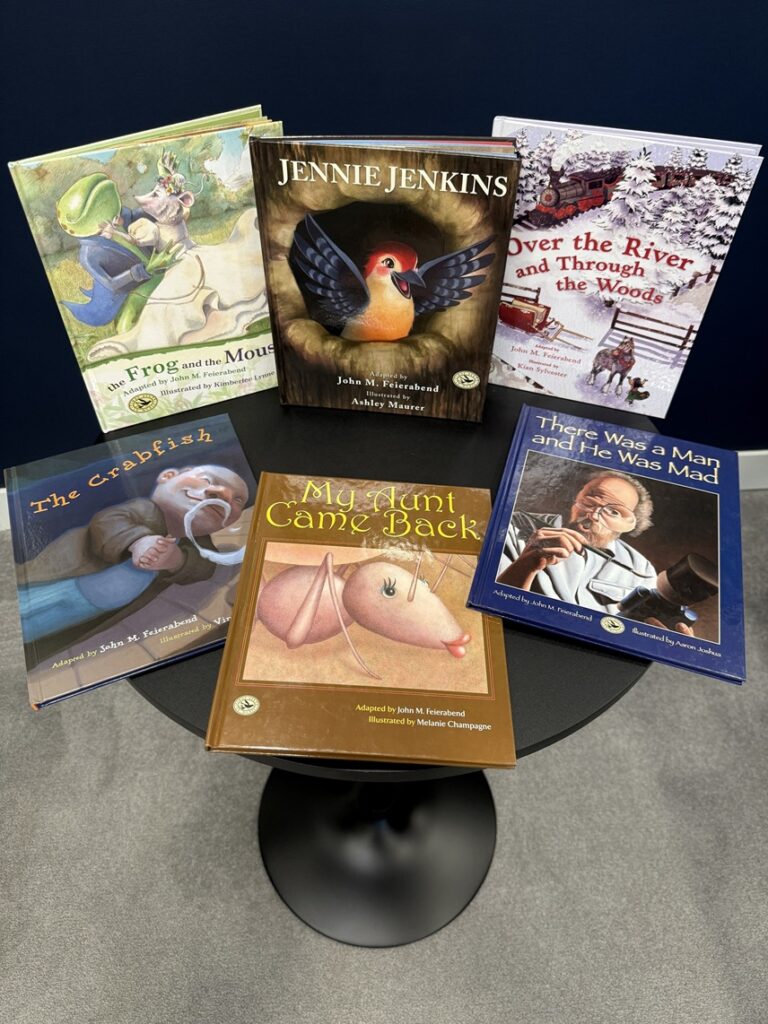
The books are part of a 22-book series Folk Song Picture Books by John M. Feierabend, a leading educator on music and movement in early childhood. I like to call them “Songstories.”
They’re meant to bring great songs of our heritage to life. The first book in the series, The Crabfish (2005), came directly from the first book in Dr. Feierabend’s program for infants through elementary age, First Steps in Music. He also authored Conversational Solfege, an educational music literacy method for school-aged students.
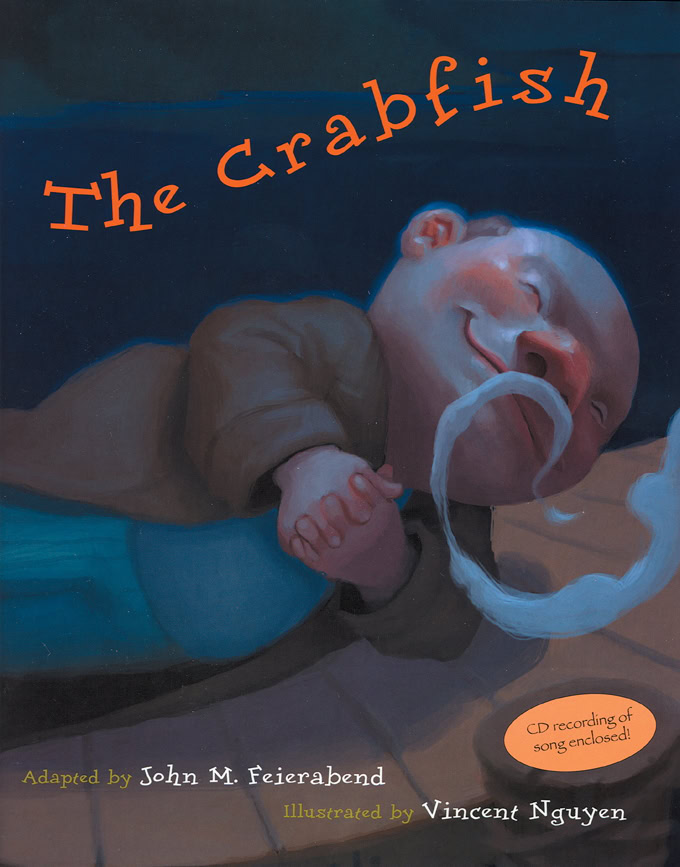
Here’s a sneak peak of The Crabfish.
How I Came to Know These Books
When I first opened my piano studio in 2011, I started getting inquires for students as young as age 3. Since I was trying to build a business, I didn’t want to turn them away, so I began to really dig into my options for teaching preschool piano.
I dabbled into every piano method for young beginners I could get my hands on, including Wunderkeys (Trevor and Andrea Dow), My First Piano Adventures (Randy and Nancy Faber), and Keyboard Games (Marilyn Lowe).
While I wasn’t looking to start a dedicated early childhood music program, I like to immerse myself in everything that’s out there. I looked into Music Together, First Steps in Music and my top choice at the time, Musikgarten. However, I had just finished paying for a Masters degree, and couldn’t foresee investing in the formal training to run a Musikgarten program.
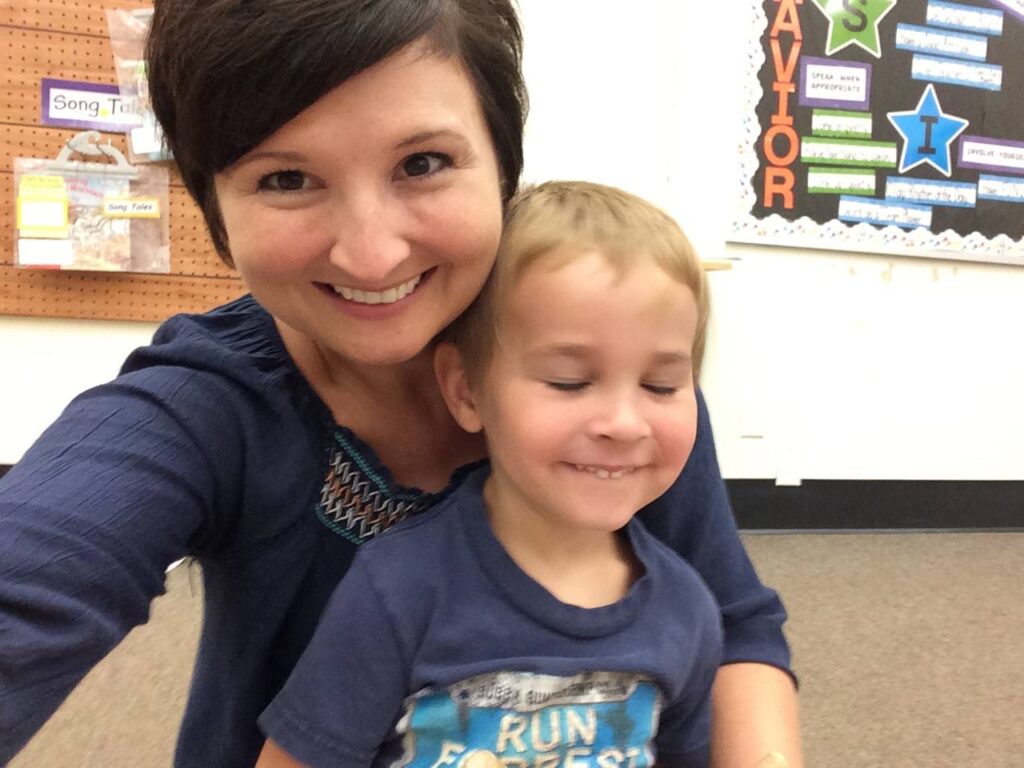
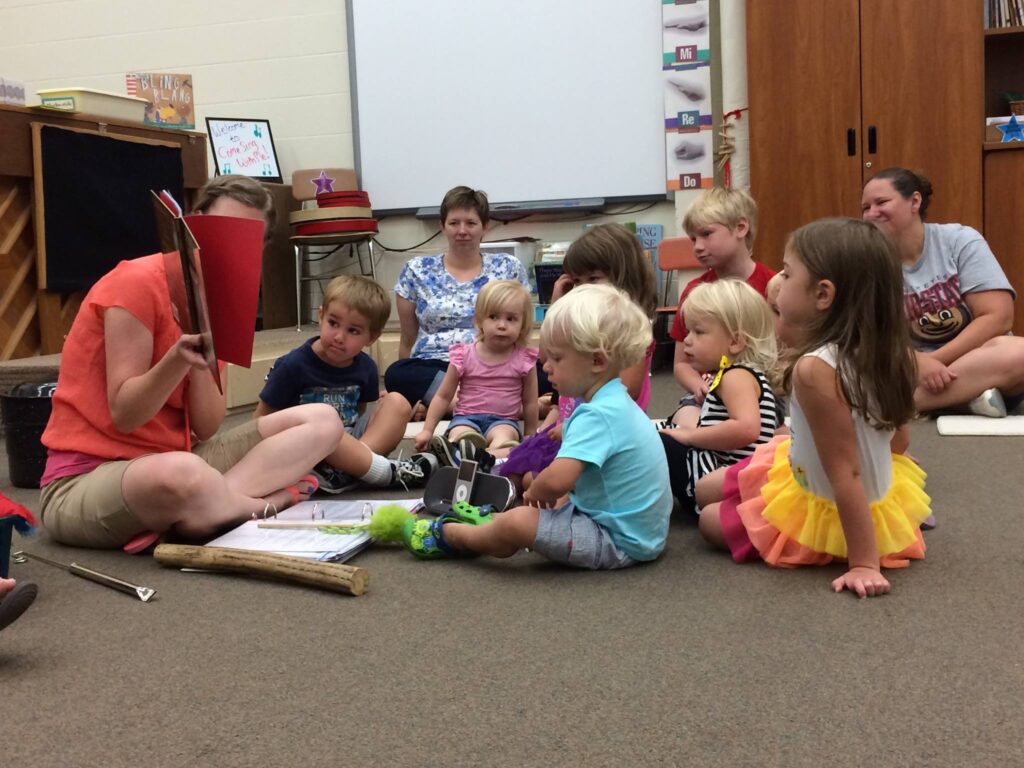
Instead, I volunteered to take my nephew to a local First Steps in Music class for a summer. This is where I first came across the Songstory books. (BTW, that nephew is now 15, an excellent bass guitarist and is currently taking theory lessons from me. 🙂 )
So, I started combining a little of this and a little of that.
I used Marilyn Lowe’s Keyboard Games A, the older version of Wunderkeys (which I preferred over the newer edition), fingerplays and pattern activities from the Wunderkeys, and a few tools from the Feierabend resources—including Picture Cards and the Songstories I’m sharing with you today. I used these resources both in private and group settings. This was all around 2014.
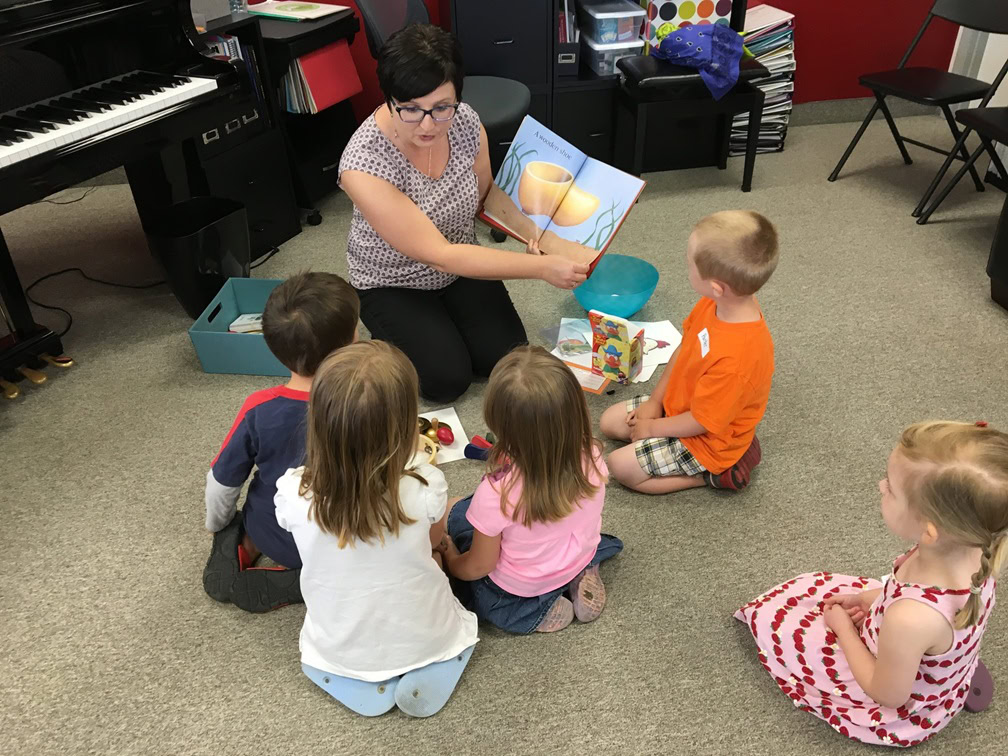
In 2016 I went through training with the Gordon Institute for Music Learning, which has since shaped the way I approach lessons for young beginners. From those early years of exploration, only two resources made the cut and have continued with me to this day: Marilyn Lowe’s Keyboard Games books and these Songstory books.
The Books
The books are beautiful and well-made, so they are a bit of an investment at $17-$18 apiece. I started by purchasing two or three right away. I can’t quite remember how I chose them, except I do distinctly recall My Aunt Came Back from the class I attended—it’s a fun echo song the kids absolutely love.
Click on each image below to visit the product page on GIA Publications, where you can listen to the audio files.
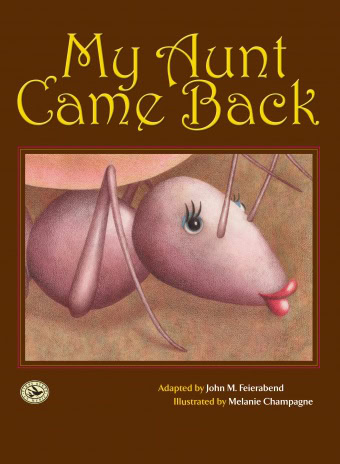
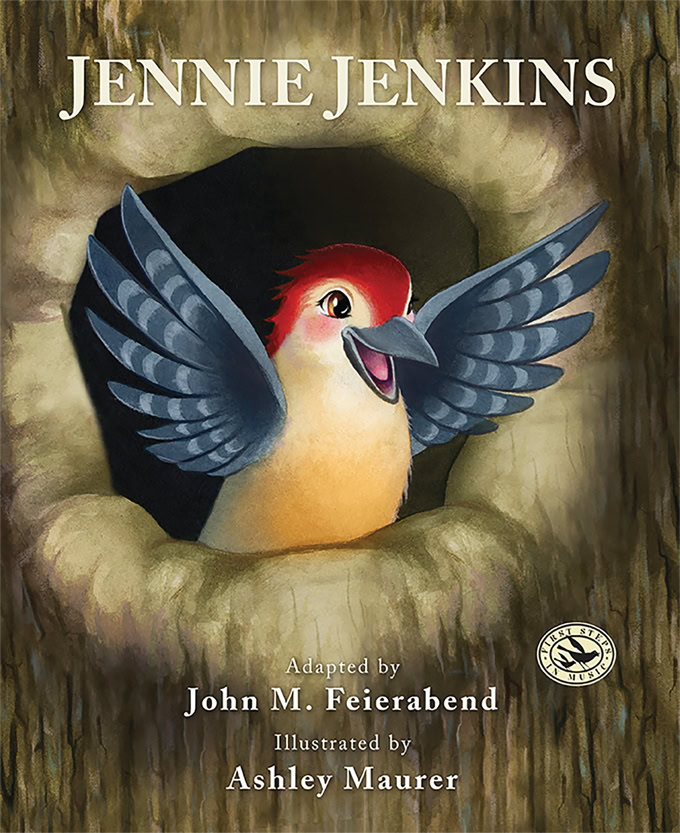

I finally added three more books a couple of years ago, bringing my total to six.
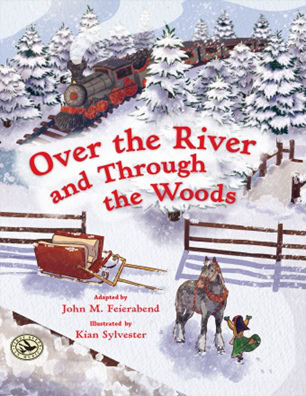
I wanted Over the River and Through the Woods because it was a classic Thanksgiving and Christmas song that is perfect for the holidays.
As for the other two choices: after my training in Music Learning Theory, it was important to me that if I was only going to own a handful of these books, I needed to make sure I had a variety of tonalities represented. (Including lots of musical contrast is an important principle of MLT.)
Not surprisingly, a lot of them are in major keys, but I did some digging and discovered a handful in other tonalities. Since you can’t view the notation online, I spent time listening to clips of audio files. (I may have missed some, so please let me know if the comments if you know of others!)
The Crabfish is in D Mixolydian (meaning instead of using I-IV-V, it uses I-IV-VII).
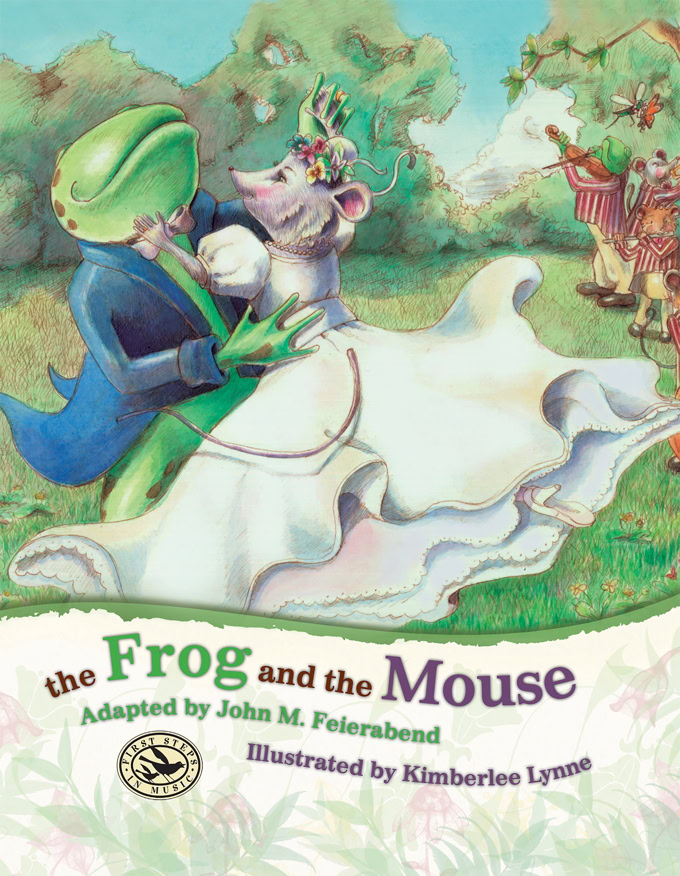
The Frog and the Mouse is in C Aeolian (meaning instead of using i-iv-V , it uses i-iv-VII).
Kitty Alone C Mixolydian.
Old Joe Clark C Mixolydian.
The Taylor and the Mouse plays back and forth between F# Minor (i-V) and Aeolian (i-VII)
While there are 22 books to choose from in the series, I am only featuring the six that I personally own. I have been incredibly happy with all of them, though it did take a bit of practice to get my mouth around the words in The Frog and the Mouse—it can be a mouthful!
GIA has a great description and audio recording available of every single book so you can listen and choose the ones that most delight you. Plus the full song notation is always included at the back of the book!
—
A Quick Note on Audio Variations: The audio file for Jenny Jenkins listed on the GIA website does not quite match the notation in the back of the book precisely. Mostly, the singer just takes a little extra time after the first four bars before the next phrase. I asked GIA about this, and here is what they shared:
“That’s pretty common (as long as they are subtle differences). Jill Trinka, the woman you hear on the recordings, often sings the rhythms more freely than they’re notated and occasionally sings a different pitch here or there. (She might even sing a wrong word now and then.) It’s difficult to capture authentic folk song expression, which is often inspired by the natural word rhythms and storytelling, so we do our best to approximate the notation on the page while allowing Jill artistic freedom. Hopefully this makes sense.”
I only inquired about this because, out of all the books I owned, this was the only one where the recording drifted from the printed page. This video does something similar taking a little extra time between phrases. Let’s face it – you need it to breathe! LOL
—
I will say that my students consistently enjoy the echo and call-and-response songs the most. Of those available that would include:
Echo Songs
Call and Response
- The Crabfish (students can sing the “Mash-a-row-dow-dow” refrain)
My Next Purchase
If I were to expand my collection, the next books on my wish list (in no particular order) would be:
- There Was an Old Lady Who Swallowed a Fly (total classic!)
- The Fox Went Out On a Chilly Night (such a lovely tune)
- Had a Little Rooster (I love this melody, and it’s in triple meter!)
- The Other Day I Met a Bear (another fantastic echo song)
Storing the Books
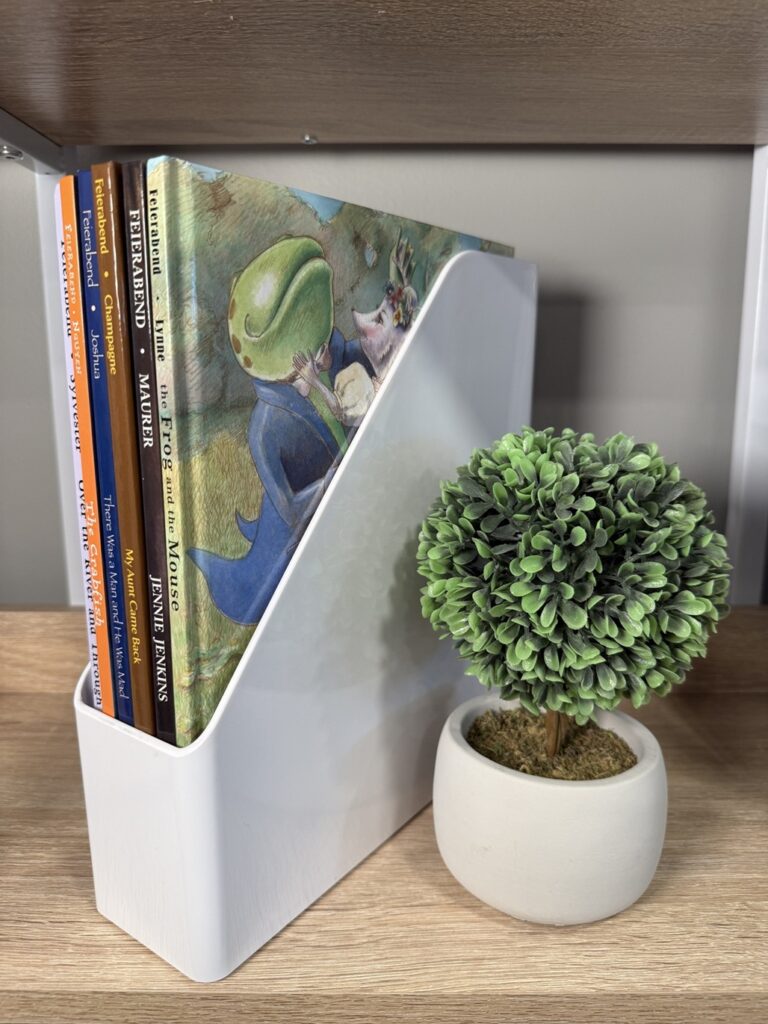
My favorite sturdy plastic magazine holders have been the perfect storage solution for this series. I like highly recommend narrow magazine holders because the slim design prevents the books from slouching or bending if the bin isn’t completely full.
Unfortunately, it looks like they don’t offer them in white anymore, but you can still grab the clear version from mDesign.
The Backstory of the Songtale Books
This video gives a wonderful little backstory on how the books came to be, tracing the entire journey from initial concept to the final product.